
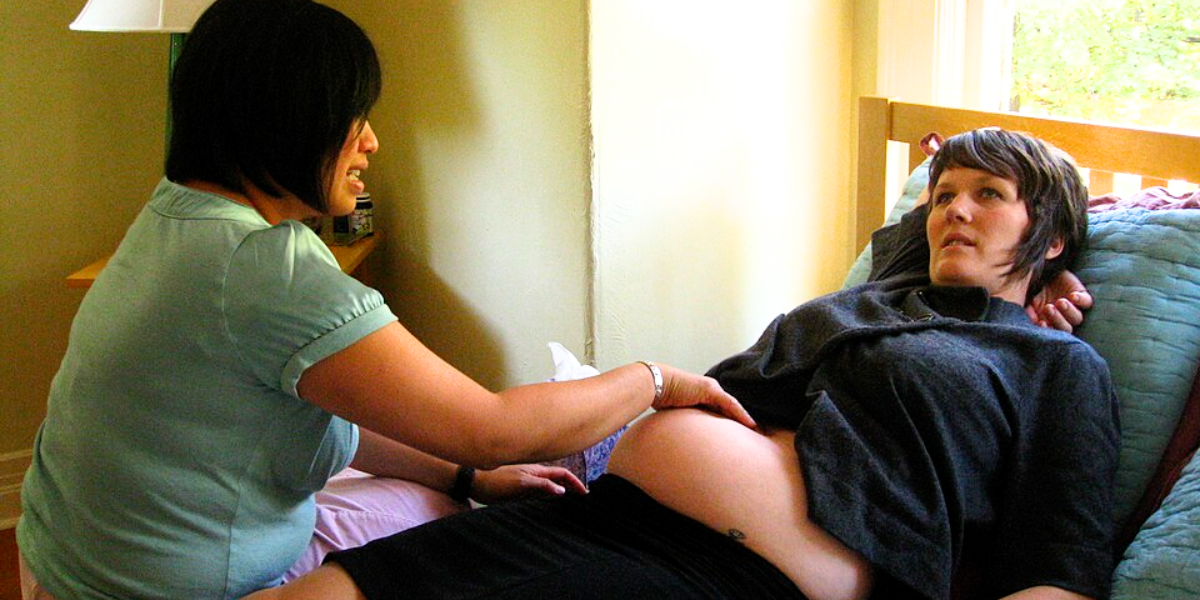
Midwives in Ontario have been fighting for equitable pay and fundamental labour rights for decades. But the Ministry of Health has continually denied them fair treatment, devaluing their work and compromising patients’ access to midwifery care.
Midwives deliver care for roughly 20% of all births and newborns in the province, serving nearly 30,000 Ontario families every year. Their care yields excellent clinical outcomes and high client satisfaction, with the demand for midwifery services on the rise.
Despite this need, the profession is facing a crisis of attrition. One in seven midwives in Ontario is on leave from practice due to burnout. What’s more, growing numbers of midwives are leaving Ontario for other provinces and the profession is having trouble attracting new recruits.
A long history of pay inequity
According to the Association of Ontario Midwives (AOM), which represents midwives in contract negotiations with the Ministry of Health, one key factor contributing to this crisis of attrition is inequitable compensation. Midwives have historically been underpaid. In 2013, the AOM filed an application with the Human Rights Tribunal of Ontario, claiming the province had continually and systematically set a discriminatory compensation structure for midwives.
These claims were based on a gender wage gap between midwives and other practitioners in the field. The profession of midwifery is gender-segregated, meaning it is primarily composed of women practitioners who serve pregnant and post-partum women and trans-folks, as well as newborns. Because of this, midwifery has been historically undervalued as “women’s work.”
In a widely celebrated victory, the AOM received a landmark pay equity decision in its favour in 2020, with the Tribunal ordering the Ford government to take concrete actions to end the discriminatory pay gap midwives experience as a result of the Ministry of Health’s actions.
However, issues around inequitable pay continue. Like other public servants, midwives had their salaries capped in 2019 when the Ford government froze wage increases at 1% for three years with the passing of Bill 124. Unlike other public servants, however, midwives have not received redress since the law was repealed. The Ministry of Health has claimed that the retroactive wage increases midwives are receiving as part of winning their case with the Human Rights Tribunal of Ontario are enough for the time being, and that any redress related to Bill 124 will be considered as part of future evaluations ordered by the Tribunal to ensure midwives continue to receive equitable compensation.
The struggle for labour rights
Injustice around fair compensation for midwives is compounded by the fact that they cannot exercise certain labour rights when bargaining. Like physicians and other primary care providers in the province, midwives offer essential healthcare and cannot withdraw their services without seriously jeopardizing client health and safety. This reality, along with the fact that the AOM has a modestly-sized membership, makes taking collective action complicated.
For other essential service providers who work in similar contexts — like physicians, nurses and firefighters — the Ministry refers contract disputes to binding arbitration. Midwives, however, are not afforded this right. For years, the AOM has been calling on the Ministry to give midwives access to this same dispute-resolution mechanism, but the Ministry continues to refuse without offering a reasonable explanation.
Looking to the future
Ontario midwives demonstrate incredible resilience both within their professional practice and in the face of the government’s discriminatory actions. It is time for their labour to be valued the same as that of their counterparts, and for midwives to receive fair wages and access to binding arbitration.
Author

Did you like this article? Help us produce more like it by donating $1, $2, or $5. Donate