
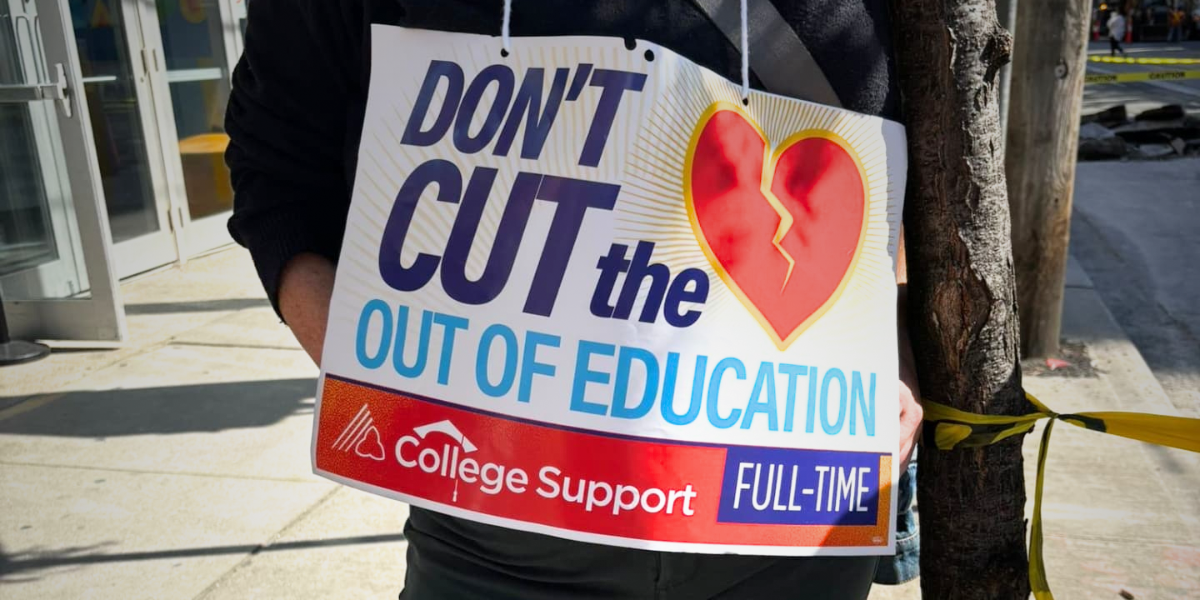
Ontario’s recent changes to OSAP are a major setback for students across Ontario. Under the new rules, only 25 percent of funding will come as non-repayable grants, while at least 75 percent will be loans that must be repaid after graduation. Previously, most aid could be received as grants. This shift places a heavier financial burden on students from lower-income families.
While education is a fundamentally public good and a social right that exists to benefit society, some see education as a personal investment. When funding is structured around loans as opposed to grants, universities operate more like businesses and students are treated like consumers: students are sold on taking on burdensome debt to pursue post-secondary education with the promise that their degrees will lead them to well-paying jobs.
This commodification of education reinforces class inequality: students from wealthier families can access opportunities without debt, while those from lower-income families face financial barriers that shape the programs they choose, the careers they pursue, and their long-term social mobility. Poorer students cannot afford to study something they perceive as not leading to a lucrative career that allows them to pay back their student debts. After graduating, those same students will be under significant financial pressure to accept certain jobs and roles that graduates without debt can comfortably decline.
As George Orwell notes in 1984, the ‘proles’ are deliberately kept uneducated, illiterate, and impoverished to maintain a rigid social hierarchy. Similarly, by shifting OSAP funding towards loans, Doug Ford’s government is limiting access to education from lower-income families, keeping them financially constrained and reinforcing the existing social divides. Publicly funded education is meant to level the playing field, and give everyone a chance to develop their skills and find their own means of income. The Ontario government is not only undermining this principle but actively opposing it by forcing students from working-class and low-income families into debt that limits their options and traps them in a cycle of financial burden.
Ensuring that higher education remains a public good requires that it is not treated as a market commodity. Students should be able to pursue learning and contribute to society without being burdened by debt. Ontario’s current approach threatens the principle of education as a right, and it is essential to defend public education as a universal social good rather than a privilege for those with money. Students, educators and workers alike must stand in solidarity to resist the commodification of learning and demand a system that serves the people.
Author

Did you like this article? Help us produce more like it by donating $1, $2, or $5. Donate