
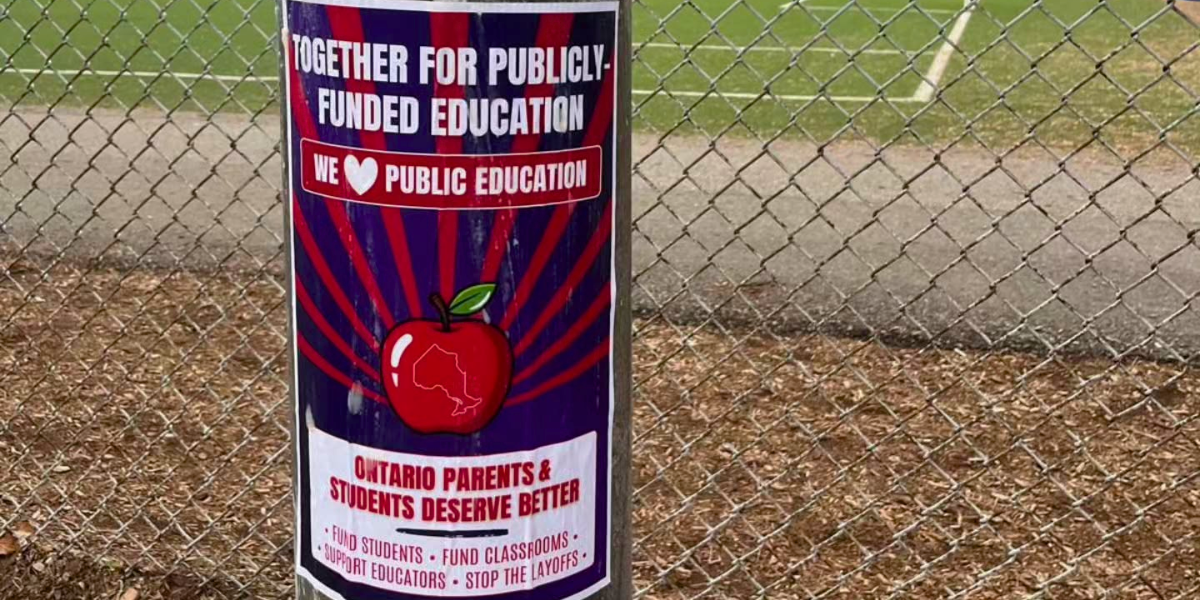
For a long time, class sizes (the ratio of students to teachers) have been a key indicator of the state of public education. However, in my lived experience as an elementary teacher in a public school board in Ontario, the crisis in schools cannot be reduced to class sizes alone. Through cuts and power grabs, the Conservative government is eating away at everything that makes classrooms functional in the first place.
Issues beyond class sizes
Even where class sizes appear smaller on paper, students are losing the supports they rely on every day. Meeting the complex and varied needs of students has always required an entire network of staff beyond just teachers. Educational assistants, child and youth workers, custodians, office staff, and specialist supports are stretched thin or absent altogether. In practice, this translates to fewer adults able to respond to complex behavioural needs, support students with disabilities, manage crises, and provide the individualized care that learning actually depends on. Workers are exhausted, and students are carrying the consequences of this under-resourcing every day.
But like the class size issue, the crisis facing Ontario’s schools is not an isolated staffing issue either. This is part of a broader dismantling of public education under conditions of chronic underfunding and administrative restructuring. Decisions made far from classrooms are reshaping the daily reality inside them, leaving teachers and remaining staff to absorb responsibilities that were once shared across a team of supports. The result is a system where both learning conditions and working conditions are deteriorating at the same time.
The Conservative government is expecting overworked teachers to deliver the same level of support to students that used to be delivered by entire systems of staff, then acting surprised when both students and teachers are struggling. Years of funding cuts have left schools with fewer and fewer resources, and despite this, the government expects more and more.
Frontline perspectives sorely needed
As an educator, it is beyond frustrating to witness the exclusion of experienced educational voices in decision-making spaces. Classroom experience is not optional in understanding the needs of students, those with direct knowledge of school realities are often excluded from, or outweighed in, the decisions that shape them.
During the 2022 Bill 28 conflict, education workers warned that schools were already operating under crisis conditions driven by understaffing and underfunding. Nearly four years later, those warnings have not been addressed. Instead, many of the conditions that drove education workers and the rest of the province to the brink of a general strike have only worsened, leaving schools across Ontario in a deeper state of strain, and communities left to navigate the consequences.
What we can do to fight back
Whether you’re a teacher or a parent, there are plenty of ways to take the fight for public education directly to the people responsible for making decisions. Here are some options to get valuable perspectives in the room to ensure that classroom voices are being heard.
Speak directly to trustees and boards
Even when it feels like they’re distant, trustees are elected and do respond to pressure. Email trustees before and after board meetings. Ask direct questions like, “What supports are being cut or reduced this year?” or, “How many EA/CYW positions are being eliminated or left unfilled?” Ask for public reporting on staffing ratios and vacancies.
Attend or speak at school board meetings
Most boards allow public delegation at their meetings where you can sign up to speak. Bring your lived experience. Focus on one or two clear ways that you see students being impacted. Ask for written responses or follow-up.
Organize with other parents and staff
Groups are harder for decisionmakers to ignore than individual voices. Getting involved in groups and organizations that are willing to take the fight forward is a way to build a movement beyond yourself. Parent councils (School Councils) can pass motions or send letters. Staff groups can coordinate messaging. Community groups can amplify concerns publicly.
Demand transparency on staffing and cuts
A lot of what’s happening is not obvious unless you ask for it. The more you request specific information (such as EA/CYW staffing levels per school vacancy rate, budget breakdowns, where money is going versus where cuts are happening), the more you and your coworkers and community members can stay up to date on the latest in your school before things get worse.
Pressure provincial representatives too
Since funding decisions are made provincially, take the time to send an email to your local MPP. Ask about special education funding, staffing ratios, and board supervision. Request clear explanations of how the so-called “record funding” being provided translates into school-level supports.
Together, we can demand of this government a public education system that gives teachers, students, and families what we need to succeed.
Author

Did you like this article? Help us produce more like it by donating $1, $2, or $5. Donate