
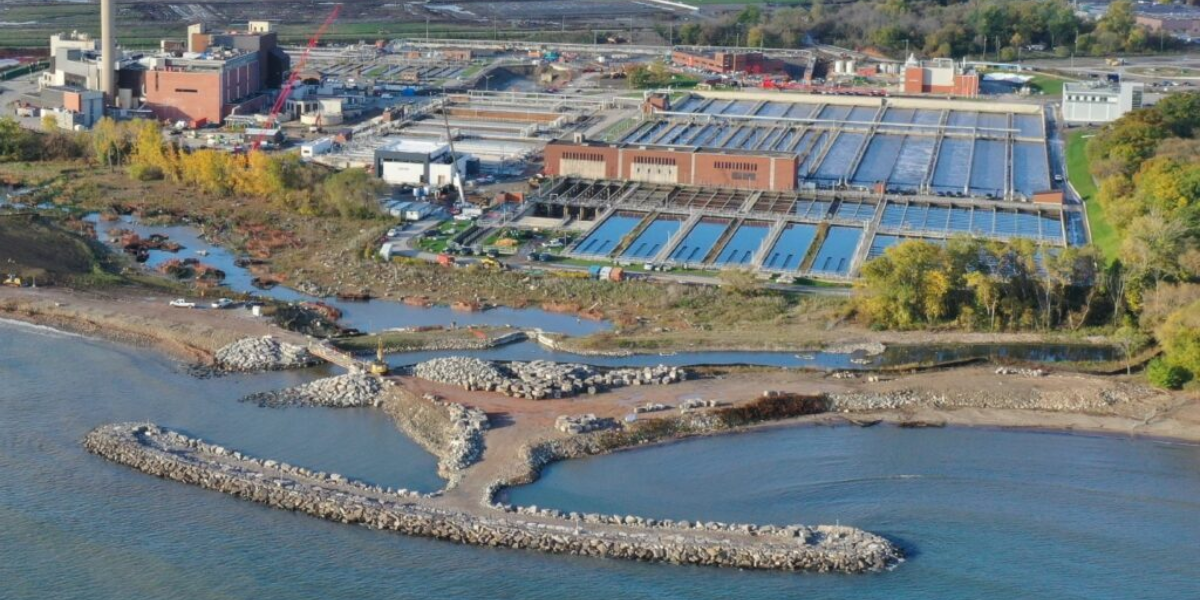
Ontario’s publicly managed water and wastewater systems are good examples of public systems that have learned from the failures of privatization and have been amended to work for the people. The publicly owned and operated water services deliver clean, safe drinking water to millions of residents every day. These systems are highly regulated, publicly accountable, and have consistently achieved top inspection ratings.
Despite these markers of success, Doug Ford’s government has passed legislation that opens the door to the corporatization and eventual privatization of our water and wastewater systems. Like other public services in recent news, this move is part of a broader political project to shift public goods and services into private hands for profitmaking, at the expense of quality, affordability, and public wellbeing.
Opening the door to privatisation
In November 2025, Doug Ford’s government passed Bill 60, schedule 16, (an omnibus bill passed less than a month after being introduced) granting the Minister of Municipal Affairs the ability to transfer municipalities’ ownership and management of water and wastewater infrastructure to newly created “public” water and wastewater corporations (WPCs). The legislation specifies that these “public corporations” must be profit driven, operating under corporate law with the goal of prioritizing shareholders. Under the new Ontario law, water infrastructure would be transferred to a WPC while existing debt undertaken to build the infrastructure in the first place remains with the municipal government. In other words, the assets will be transferred while the liabilities stay public.
The public was quick to organize, with organizations like CUPE, the Council of Canadians, and others forming the Keep Water Public coalition campaign to amplify implications of Bill 60 on Peel Region taxpayers and put pressure on the Ford government to address public concern for water privatization.
Much like what we saw surrounding the government’s handling of the Greenbelt, public health funding cuts, and education worker strikes, public outcry against water privatization pressured the Ford government to reconsider their policy decisions.
In January 2026, Doug Ford’s government responded to public concerns of privatization and outcries against Bill 60 with an amendment that restricts shareholders in WPCs to be “a municipality, the Province of Ontario, the Government of Canada or an agent of any of them” under Bill 98, which has been passed. The deliberate ambiguity in naming “agents of the state” opens the door for any number of public-private configurations. Pension funds, for example, are famously profit driven public agents, such as the Ontario Teacher’s Pension Fund, which currently holds stock in several privatized water structures in the UK, Chile, and Australia.
Both Bill 60 and Bill 98 align with broader efforts to expand the financialization of Ontario’s public infrastructure. Unless challenged, the new legislation will strip communities of their power to shape services according to their needs, making it easier to extract private wealth from public infrastructure.
Why Peel matters
The Region of Peel was selected as the pilot site to test this new model to create new revenue streams by allowing the constituent municipalities to borrow capital for water/wastewater investments from the public corporation. By 2029, jurisdiction over water and wastewater services will be transferred from Peel to its three lower-tier municipalities (Mississauga, Brampton, and Caledon), which will then be required to deliver services exclusively through a newly created WPC.
Peel Region’s water infrastructure, service, and quality, is a consistent recipient of global and regional accolades rewarding high quality water systems, a testament to public funds well invested and a highly effective public system accountable to ratepayers, water users, and voters.
When privatised water fails
The phenomenon of privatized water leading to direct decline in quality and health outcomes has been evidenced widely both at home and abroad.
In Ontario, it is impossible to discuss municipal water crises without mentioning Walkerton. The infamous preventable tragedy precipitated by the Harris government’s privatization of water testing led to seven deaths and over 2000 ill caused by an E. Coli outbreak and prompted the Safe Drinking Water Act of 2022.
In England, following the Thatcher-era privatization of water, companies have accumulated £73 billion in debt while paying out £88 billion in dividends, even as sewage spills, flooding incidents, and drought resilience have worsened. The result has been polluted rivers and beaches, damage to wildlife and human health, rising water bills, and nearly 1,200 criminal convictions for environmental offences — and yet, not a single water company chief executive has been prosecuted.
Paris’s privatization of its water system in the 80s also saw a massive hike in costs for ratepayers, where infrastructure deteriorated at rates so abhorrent, the city had to reclaim the water system in 2010, saving 35 million euros and reducing the price of water for ratepayers within the first year.
Following UK’s neoliberal talking points (which Doug Ford borrows from today), Hamilton was the first major Canadian city to privatize its water system in the early 90s. Within a year, a massive spill flooded more than 115 homes and businesses, prompting the city to reclaim its water system, saving approximately $5.66 million between 2005 and 2008.
According to the Rapid Transition Alliance, there were 235 instances of ‘re-municipalization’ of water across the globe between 2005 and 2015, a testament to the failures of private corporations to deliver safe, reliable, and affordable water to communities.
Time and time again, we have seen privatized water fail both globally and regionally, only to be rescued by the public. Today, Ontario is witnessing a stealthier path toward privatization through the corporatization and financialization of water services. This has been pushed by Ford’s government across other sectors such as health and education, which has resulted in profitmaking at the direct expense of public services. We are told that essential services like water, energy, and education need private-sector discipline and profit incentives to function effectively. But this logic is not applied to military or police funding which are also seen as core public needs.
These changes are occurring quietly through technical legislation. To fight back, these changes must be made public and resisted, as seen from the pushback to Bill 60 against renter’s rights and introducing amendments in Bill 98 to soften the push for financialization. With limited transparency, reduced public accountability, and the Minister’s expanded authority to corporatize water systems, these reforms risk concentrating power while opening the door to privatization.
To stop the corporatization and financialization of water, we must defend local democratic control, support the efforts of unions fighting to keep water public, and demand transparency in decision-making. By organizing, raising awareness, and demanding investment in public systems, we can ensure that water remains what should always be a shared public resource.
Authors

Did you like this article? Help us produce more like it by donating $1, $2, or $5. Donate