
The purpose of the system is what it does.
Renee Good’s murder by ICE (Immigration and Customs Enforcement) agent Jonathan Ross in Minneapolis was a shocking event to many, inspiring protests and pushback and front-page news stories. But at the same time, Good’s murder does not exist as an aberration: it is merely the latest episode in the United States’ long ideological project of dismantling dissent against state imposed violence.
Bipartisan support for ICE
Since its inception in 2003, ICE has operated as a political apparatus of Bush’s “war on terror” that has terrorized immigrant communities within American borders for the purpose of upholding white supremacy and capital. Now immigrant detention centers operate at max capacity, forcing the excess of innocent people ICE detains into local jails where only 5% of those in custody have been formerly convicted with a violent crime.
While ICE’s scope and budget has tripled under Trump, it has been the harmonious support and complicity of liberals that has cemented the reach of current immigrant enforcement, such as Democrat presidential candidate and former prosecutor Kamala Harris who took advantage of rising anti-immigrant fear mongering to advocate for expanding ICE. Concurrently, the liberal media has filled their counterinsurgent role to depoliticize police terror, with CBC hosting a retired FBI agent to separate the actions of Ross away from ICE’s wider deportation project. PBS has also suppressed calls for the abolition of ICE following Good’s execution, advocating instead for more resources and training for federal immigration officers. The manufacturing of consent for the massive expansion of detention centers therefore remains a bipartisan project.
The struggle continues in Canada
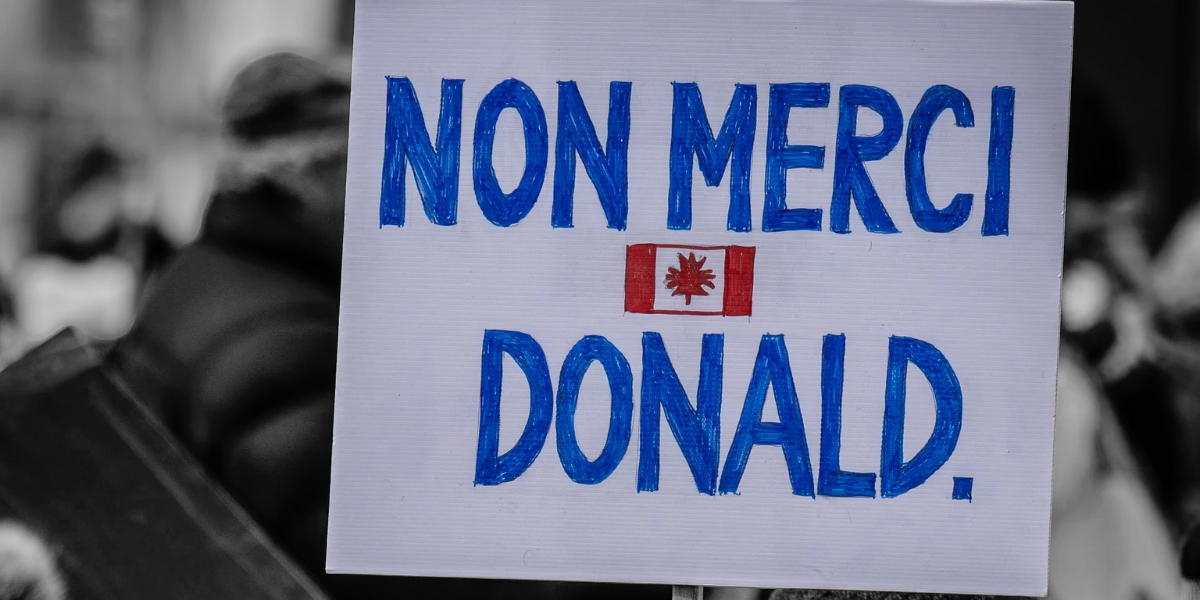
Focusing our attention on the escalating tensions in the United States is vital, but our analysis must also connect such conditions with what is happening in so-called Canada regarding carceral violence. Otherwise, we fall prone to Canadian exceptionalism, the idea that the stolen land on which we live exists as an ostensible haven for immigrants and racialized communities.
This is especially evident in a pivotal time such as now, where mass amounts of people have taken to the streets to call for the abolition of ICE. Yet such reflexive demands cannot be separated from the well-rooted Black abolitionist demands to dismantle all forms of carceral violence that exist to oppress us. As the chant here in Toronto goes, “TPS, KKK, IOF you’re all the same.”
With revolutionary fervour entering the mainstream inevitably comes counter-revolutionary forces that will attempt to co-opt people’s anger by isolating violence committed by ICE away from broader justice struggles against police and border enforcement, constraining people’s desire for transformative change within the limits of reformism. Resisting such neutralization of abolitionist sentiment requires us to understand how counter-revolutionary methods were applied in the past, a task easier said than done.
Lessons from 2020
Scholar Dylan Rodgriguez has written extensively on how the uprisings resulting from the murder of George Floyd by Minneapolis officer Derek Chauvin in the summer of 2020 were met with a proliferation of reform agendas intending to restabilize the institutional legitimacy of police. This ultimately coalesced into the implementation of the George Floyd Justice in Policing Act, proposing regurgitated actions relating to increased training, technology and resources that will provide more “oversight” for police conduct. As Mariame Kaba asserts, none of the reforms enacted would have saved George Floyd’s life. What the act did achieve was the effective co-optation of abolitionist possibilities catalyzed from a rising public consciousness into a contained repository of liberal reformism—people demanding change were given the status quo of policing, but with even more funding and resources.
Police body cameras, an often-celebrated development by reactionary pundits and well-intended progressives alike, epitomize the impossibility of holding police “accountable.” Alec Karakatsanis showcased in his paper The Body Camera: The Language of our Dreams that, contrary to popular belief of police departments resisting the introduction of body cameras, it was precisely the police themselves who wanted such devices implemented, as it would allow them to increase their surveillance on marginalized communities to an unprecedented level.
The death of George Floyd, alongside the ensuing uprisings calling for increased police oversight, provided an excellent opportunity for law enforcement personnel to advocate for increased funding for body camera technology. Five years and millions of dollars and body cameras later, American police continue to kill at alarming rates while performing a mass surveillance operation under the guise of increased accountability.
In response to demands to defund the police in 2020, every major Canadian city government followed in the footsteps of American urban centres by increasing its funding towards police. This was done alongside reform measures like increasing police personnel, mental health teams, body cameras and anti-racism training, none of which have addressed the real problem: the police themselves. Community policing, a counterinsurgent strategy intending to perpetuate the infiltration of poor and racialized communities, has also massively expanded since 2020.
Mark Carney has run his office through a nationalist and anti-immigrant lens, maintaining the status quo of white supremacy, xenophobia and colonial hegemony that serves as the foundation of the current neoliberal order. Carney’s Canada is contingent upon understanding the ideal, national citizen as one associated with whiteness, who, in the words of Sunera Thobani, is exalted above all others to personify the values and ethics of the Canadian state. This explains his plans to spend $617 million on hiring a thousand more border officers for the Canadian Border Services Agency (CBSA) that will continue to legitimize a deeply embedded racism within Canada’s settler-colonial consciousness, further exposing Canadian exceptionalism for the myth that it truly is.
Rejecting Canadian exceptionalism
El Jones, in her poem entitled Canada is So Polite, perfectly encapsulates the fantasy so many “Canadians” tell themselves. The foundation of the Canadian identity is built upon lies, lies that Jones confronts through her satiric verse:
We invented hockey. Oh wait, it was Black people who invented the slap shot and butterfly goaltending while we hide that all out of sight, and that’s why Canada is so quiet, cause everyone in Canada is so nice. And let’s not mention the Shelburne race riots or cross burnings or Africville or 1200 missing and murdered Indigenous women but there is no genocide….shh…its rude to raise your voice in Canada.
While Canadian exceptionalism is a myth, it plays a very real role in the national psyche. The relative comparison Canada makes with the US exists to absolve us from taking collective action against our own country’s oppressors, comforting our pacified predilections that determine us better than our fascist contemporary by means of politeness. We will uphold white supremacy, but we will be kind while doing it. As Jones writes: Because Canada is so multicultural, we just wish that you all people of colour can be more punctual. It’s just that the white culture is more functional.
Harsha Walia calls the current migrant worker regime under the Canadian state what it is: legalized human trafficking that exploits precarious workers for the purpose of capital accumulation. Walia states that “workers are declared illegal, but the surplus value they create is not.” The UN has compared Canada’s Temporary Foreign Worker program to slavery, where the disposability of migrant life is administered for the purpose of racial exclusion from permanent residence.
Alongside the hiring of a thousand new border control officers, the liberal government intends to implement Bill C-12, a form of legislation that will massively increase the risk of deportation and the revocation of immigrant status. This enforcement-led approach will worsen the unregulated toxic supply of drugs on our streets and separate families. CBSA openly boasted about their plans to increase deportations by 25 percent in 2025, with seemingly little end to the expansion of border funding in sight heading into the coming year. This has coincided with the passing of Bill C-2, a deeply xenophobic measure that aims to dismantle the right for refugees to
seek asylum. The act also grants the Immigration Minister the authority to cancel permits and to have unrestricted access to information on undocumented workers.
More carceral personnel means more carceral violence, where immigrants and refugees are detained in CBSA prisons defined by deplorable conditions that violate their rights. As opposed to Canadian prisoners who are designated as citizens, Canada places no restrictions on how long migrants can be held in custody. While other provinces have committed to ending the immigration detention agreements, Ontario continues to detain migrants in overcrowded provincial jails such as Maplehurst detention center, perhaps the most notoriously violent jail in the country.
With the rising sense of radicalness in the demands to abolish ICE in the US, our role as socialists in so-called Canada is to bridge this heightened consciousness with our organizing efforts against police terror that is directed at migrants and racialized communities here. We must remain firm in our abolitionist stance that refuses to compromise with the carceral state that only aims to co-opt our anger for their own purposes of maintaining their legitimacy and securing more resources for themselves. The biggest threat to the settler state is for the people to be united against their ideological agenda of division by race, resident status and borders. This means remaining steadfast in our demands for status for all and defunding the police, both at the border and in our cities, onwards to the abolition of all prisons that seek to block our path to liberation.
Author

Did you like this article? Help us produce more like it by donating $1, $2, or $5. Donate