
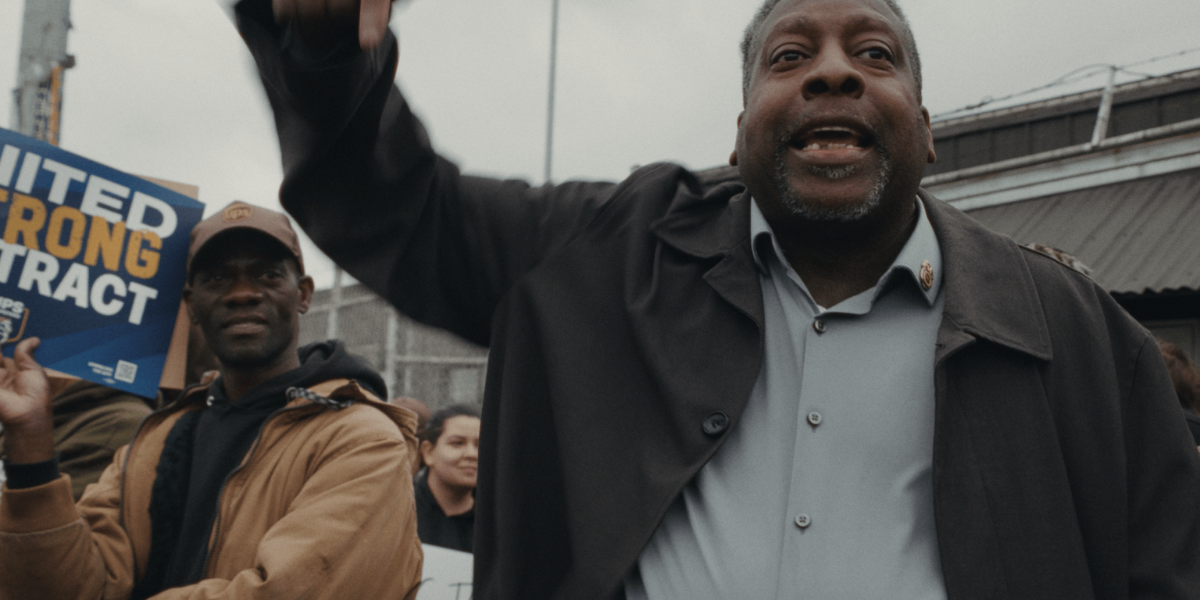
Barbara Kopple’s latest film, Union Town, opens with a series of burn-ins about the staggering number of packages that “are delivered” and food deliveries that “are brought” daily in New York City.
But these passive-voice phrases suggesting an anonymous flow of goods and services are quickly corrected to reinforce that in fact it is “people” who are workers doing these deliveries with their “labor.” The thoughtful documentary unfolds around this central premise – that people are labouring, both as workers on the job and also as labour organizers championing better working conditions through collective gains.
Workers’ plights across three campaigns
The film follows three labour struggles from 2022-2025 – UPS workers, app delivery workers, and Amazon workers. And while the film delves into the specifics of these three contexts, read together, the message from these struggles is clear. Union Town highlights the importance of workers organizing side by side, talking to people one on one, forming relationships and community, and recognizing – as one worker expresses – it’s the “same bullshit” everywhere. These corporations often classify workers as independent contractors, not as employees. Wages and working conditions are poor across the board. On the inadequacy of their wages as a part-time UPS employee, one worker comments, “you can’t pay rent with that. And where does your food come from?”
Through human stories, Union Town invites viewers to pay attention to the plight of workers. UPS drivers experience a severe physical toll on their bodies delivering packages, and the film highlights the wear and tear on the body, lack of air conditioning, and working through days of extremely poor air quality with no protections. App delivery workers face dangerous conditions and weather on the roads, risking accidents and robbery, all the while dealing with uncertain work conditions, wage theft, and inadequate pay. The film highlights the constant threat that app delivery workers experience of having their work accounts suddenly “deactivated” without fair notification, recourse, or appeal beyond an AI chat box. Spotlighting the work of the Worker’s Justice Project, the film also highlights the struggles of undocumented immigrants facing heightened ICE deportation threats and the struggles of female migrant workers facing sexual harassment.
Learning from roadblocks and celebrating wins
Union Town shows how heavily resourced the union busting efforts are at Amazon. For example, the corporation pays some workers up to $15,000 a week to disrupt on-the-ground unionization efforts in their facilities. At one striking facility, outdoor taps are turned on to flood out striking workers in frigid winter conditions. Over at UPS, CEO Carol Tomé’s praise for replacing workers with robots who don’t have “attitudes” or need sick days is a chilling reminder of the fight to come.
Alongside the risk and difficulty of organizing, the film does not shy away from showing some of the dark sides of this work. It highlights Teamster machismo and spotlights part-time UPS workers feeling like they were silenced in contract negotiations for higher wages while wanting a continued push on key elements of their working conditions like split shifts. Even the mess of the clean up after a strike action at Amazon –- after everyone has gone home and left one individual to deal with it alone – gets a moment in Union Town.
And yet, the film showcases the importance of celebrating collective wins.
Despite extreme union busting, Amazon workers strike nationally for six days before the busy holiday season in 2024. UPS workers get a landmark new contract. The Worker’s Justice Project wins a fight to introduce legislation to protect delivery app workers around deactivation without recourse.
Alongside these wins in labour struggles, the film also highlights the wins of human connection and collectivity. Members of Worker’s Justice Project attend the funeral and support the family of a deceased app delivery worker who is tragically killed while working. A Teamster’s son shares how thrilled he feels learning call-and-response chants on the megaphone at an organizing rally. The same child is shown by his father that an individual twig can easily be snapped, but a whole bundle together is harder to break.
It is in these lessons of workers sticking together, persisting, and committing to continuing to fight where Union Town is most resoundingly hopeful.
Author

Did you like this article? Help us produce more like it by donating $1, $2, or $5. Donate