
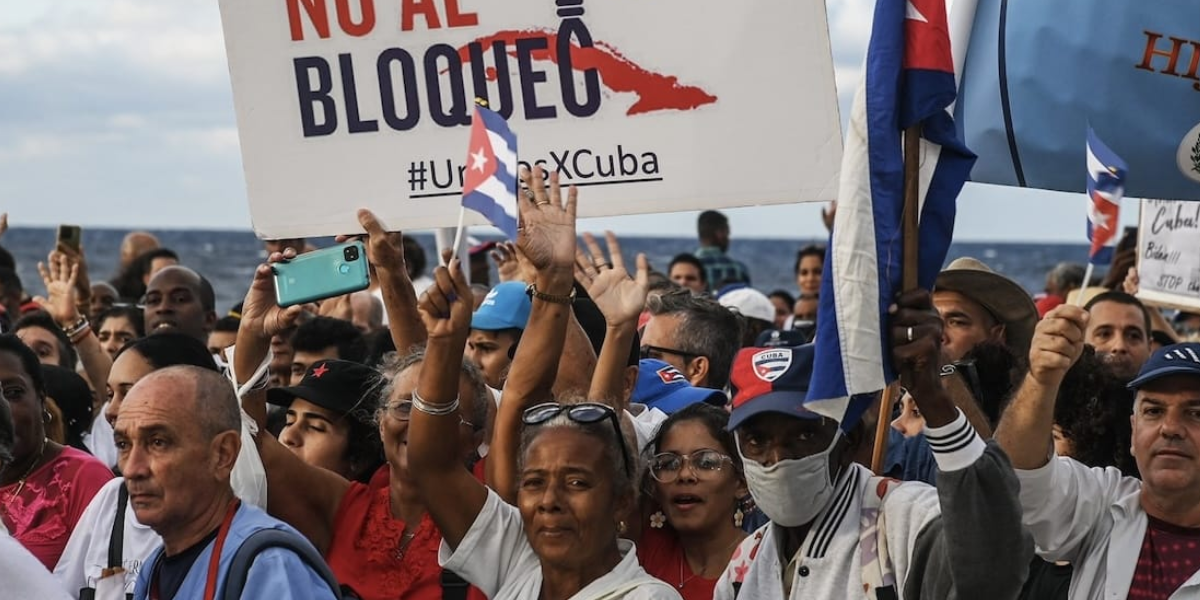
Cuba is on the brink; news of armageddon for the socialist project is all we can hear since the United States government tightened the embargo on the Caribbean nation. Despite Mexico providing some humanitarian aid, Cuba is discussing rationing fuel. Its aging energy grid is crumbling, airlines are cancelling flights to the island due to the inability to refuel planes, and avenues for relief are waning as Trump attacks friendly nations or threatens tariffs against anyone who dares to defy the United States.
Although Cuba has always faced the challenges associated with showing what it means to push the boot of imperialism off one’s neck, this current battle brings additional challenges, compounded by difficulties arising from the COVID-19 pandemic. Canadians must demonstrate that this will not stand and rally behind a message that we can all agree on: “yanqui, no.”
Collective punishment for Cuba and the world
Cuba has long had its development hampered by US interference. Secretary of State Marco Rubio—who has made his political career by lying about his family fleeing the revolution—and Donald Trump are in line with the Kennedy administration following the Bay of Pigs: Cuba’s socialist revolution will not be toppled by foreign military intervention.
Time and again, Cubans have demonstrated a willingness to go to war to maintain the revolution. The current US regime is resorting to tighter economic sanctions, with the aim that, as outlined in Lester D. Mallory’s internal memo from April 6, 1960, “The only foreseeable means of alienating internal support is through disenchantment and disaffection based on economic dissatisfaction and hardship.” This tactic has had some success at great cost to the Cuban people, as explained by Marta Jiménez, who explains the ramifications through tears:
You can’t imagine how it touches every part of our lives… It’s a vicious, all-encompassing spiral downward. With no gasoline, buses don’t run, so we can’t get to work. We have electricity [for] only three to six hours a day. There’s no gas for cooking, so we’re burning wood and charcoal in our apartments. It’s like going back 100 years. The blockade is suffocating us—especially single mothers.
The effects of this embargo are intentionally collective. The US government wants to punish the people because they continue to elect a government that represents them.
The embargo has also had negative ramifications on other nations, particularly relating to access to healthcare. Regardless of the devastation wrought by the embargo, Cubans have achieved numerous progressive reforms domestically, with their healthcare system serving as a primary example. Cuba has also been committed to international solidarity, most notably by providing aid through healthcare services to numerous countries.. These services include sending medical personnel and training, both in Cuba and abroad. With Trump’s focus on the western hemisphere, as outlined in the US national security strategy, many countries are averting the use of Cuban doctors in their healthcare treatment, hoping to avoid the ire of Trump. The only reason for this is to eliminate an additional revenue stream for Cuba, despite citing that the main aim is to attack the “forced labour” associated with these programs. At a time when divestment in foreign aid is on the agenda—with Canada being one example—the people in countries that rely on Cuban healthcare, like Guatemala, are suffering the consequences of the US campaign because they are losing vital services with little recourse.
Canada and Cuba
At a time when world leaders are supposedly recalibrating the existing world order, a defence of Cuba provides an opportunity to do exactly that and for Canada to strengthen a past relationship. Canada’s ties to Cuba go as far back as the inception of the revolutionary government, with then Prime Minister Pierre Trudeau visiting the island. Even today, Canada still demonstrates support for Cuba by voting in favour of ending the US embargo despite growing support for denying the resolution and abstaining from voting. Support from the Canadian government, however, has mainly been symbolic. Symbolic gestures, unfortunately, do not result in material benefits. This current moment requires more.
Cuba sí, bloqueo no
On February 13, the Canadian Network on Cuba held a meeting with Cuban ambassadors to address the ongoing efforts to combat the recent aggression. Obviously, the country is doing what it can to survive this recent tumult, and its officials suggested that people do what they can to show solidarity with Cuba. Fortunately, there are opportunities arising to do just that. On Sunday, February 22, 2026, people are encouraged to rally outside the US Consulate. Outside of protest, however, there are efforts made to get resources to Cuba. Whether it is donating to the Nuestra America Flotilla, reaching out to your member of parliament, or signing Alexandre Boulerice’s petition, there is plenty that can be done to support Cuba.
¡Hasta la victoria siempre!
Author

Did you like this article? Help us produce more like it by donating $1, $2, or $5. Donate