
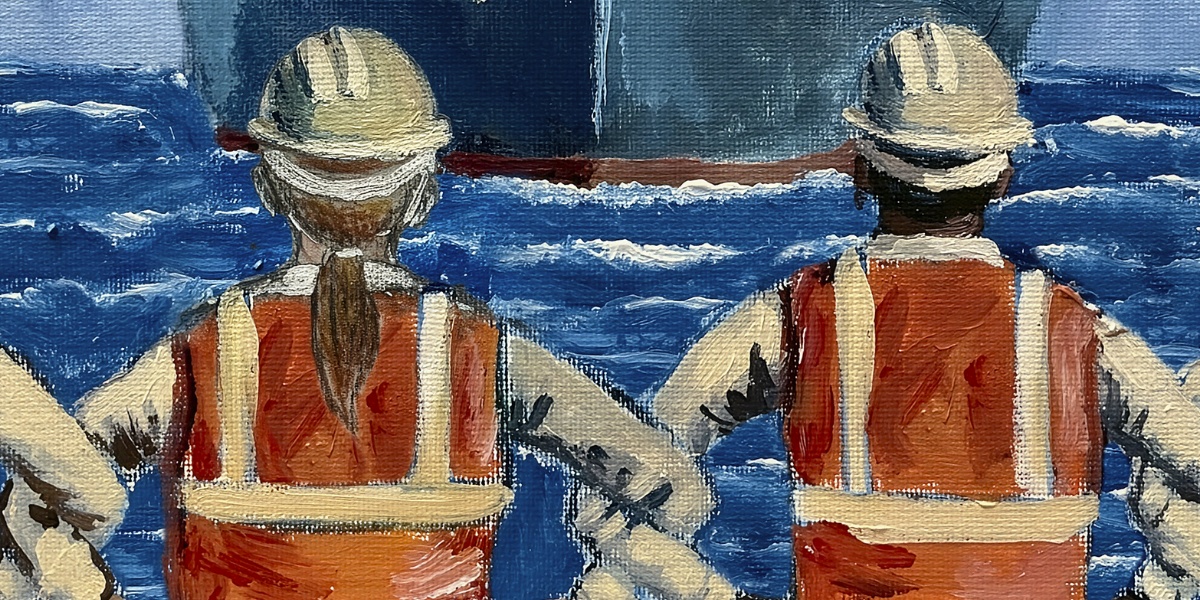
Cover image: “Holding the Line” by Ibrahim Abusitta. View the full painting in Toronto at 25 Cecil St during this year’s Mayworks Festival, taking place from May 1 to 31.
From May 1 to May 31, the Mayworks Festival returns across the Greater Toronto and Hamilton Area for its 41st year. With it comes a variety of art across disciplines, showcasing the struggles, pains, realities, and joys of labourers across Canada and around the world.
“We allow our festival to do the work that it always does, which is to tell stories of workers and further our work to support struggles for better workers’ rights,” says Mitra Fakhrashrafi, curatorial and programming coordinator of the festival.
The festival invites workers to witness the intersectionality of labour through various artistic media and provides them a space to reflect, discuss, and get inspired to organize by the art around them — while recognizing work as an art itself.
This year’s diverse body of festival works includes live theatre, film, animation, installation, music, and pastry making, with notable themes of work, debt, and supply chains.
“We bring in these themes because they allow us to make the connections that we already want to be making — having artists think about art and our audiences thinking about internationalism, thinking about flows of movement, flows of capital,” says Fakhrashrafi.
The Mayworks Festival has long held strong values of internationalism, and this year is no different. The 2026 lineup includes film screenings focusing on the legacy of Franz Fanon, showcasing a plethora of Pan-African cinema, and discussing Fanon’s impact on social struggles and renewed anti-imperialist and internationalist ways of thinking. Fakhrashrafi believes that Mayworks has the responsibility to reinvigorate internationalism in the modern-day labour movement.
“Internationalism was present in the labour movement and in social movements more generally for a long time and in really meaningful ways,” Fakhrashrafi says. “A part of it is a matter of responsibility in the sense that we are deeply intertwined in the lives of people across the world. It’s inherent to our lives but oftentimes underdocumented — under-discussed.”
Through the festival’s Labour Arts Catalyst Program, a residency in which artists develop a piece collaboratively with a labour justice organization, the festival has brought renewed focus to under-discussed issues plaguing workers within and outside of Canada.
Working with Anakbayan Toronto, program resident Roann Enriquez produced a play about worker’s struggles in the Philippines with strong connections to the labour issues faced by Filipinos abroad here in Canada.
Fellow program resident Miru Yogarajag worked with Peel region organizing group Justice for Truck Drivers to create a documentary short film following non-unionized truck drivers who are new migrants as they deal with precarious day-to-day work in a new country.
“It’s also quite relevant and important to the lives of working people in Canada — the imperial system that is maintained through these different forms of violence in the Global South is upheld by the same rulers making our lives here in the West challenging.”
Fakhrashrafi believes that Mayworks can inspire other art festivals to recognize and champion artists as workers and likewise, workers as artists.
“Artists are very underdiscussed as people with powers — as part of the working class… It’s important to remember that artists’ labour is labour and that connects artists more meaningfully to other workers, not only across the world, but also in their city.”
At a time in Canada where labour unions across the country are defanged, festivals like Mayworks inspire audiences to see themselves as labourers and to further become organizers advocating for the change.
Author

Did you like this article? Help us produce more like it by donating $1, $2, or $5. Donate