
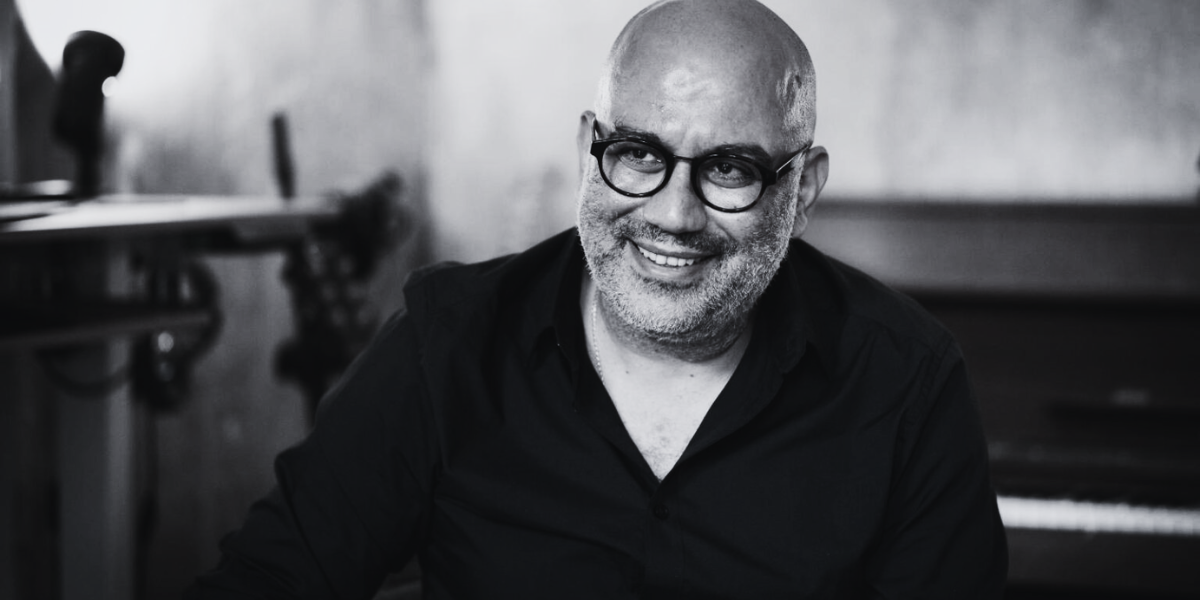
Immigration, Refugees and Citizenship Canada (IRCC) has denied entry to Hossam el-Hamalway, a prominent Egyptian journalist who is scheduled to deliver two lectures at Simon Fraser University (SFU) in September.
El-Hamalawy is an award-winning journalist and author who has written extensively for nearly 30 years about his experiences fighting for freedom of speech and expression under the regimes of Hosni Mubarak and Abdel Fattah el-Sisi in Egypt. A principled defender of human rights and freedom of the press, el-Hamalawy was jailed and tortured by Egyptian authorities on multiple occasions in retaliation against his advocacy.
El-Hamalway recently published Counter-Revolution in Egypt: Sisi’s New Republic (2026), which documents the widespread use of repression in Egypt, including torture, against any dissenting voices. A group of professors at Simon Fraser University in British Columbia had organized a book launch and a panel discussion on campus, where they had invited el-Hamalawy to speak in person in late September.
El-Hamalawy fled Egypt in 2015, about a year after el-Sisi seized power in a violent coup, and now lives in exile in Berlin, with German citizenship. His book is based on his successful dissertation at the Freie Universität Berlin, where he earned a Ph.D. in political science.
Ahead of his visit, el-Hamalawy was preparing to enter Canada as a German citizen, and had applied for an electronic travel authorization (eTA).
“German citizens need only apply for an eTA, not a visa. And it normally gets processed in a matter of minutes,” said el-Hamalawy. “So, I logged on to the website and answered all of the questions I was asked to.”
One of the questions IRCC asks is whether an applicant holds a criminal record or has ever faced trial. El-Hamalawy answered truthfully about his experiences in Egypt: he was detained and tortured under Mubarak in 2000 and 2002, and summoned to appear before a military tribunal in 2011.
“I have been arrested multiple times in Egypt, for taking part in protests. But I have never been convicted or put to trial, because that’s not how things work in Egypt,” explained el-Hamalawy. “They arrest you, they torture you, they beat the shit out of you and then, maybe, you are released.”
El-Hamalaway’s experiences are widely documented online, and have been the subject of international appeals for his release.
Shortly after submitting his application, el-Hamalawy was notified by IRCC that it needed more information, including supporting documentation from the Egyptian government.
“I sent a long letter back, explaining that I cannot go back to Egypt, nor approach the Egyptian embassy, because I am a political exile. That would put my safety at risk,” el-Hamalawy stated.
International human rights organizations estimate that over 60,000 political prisoners are being held in Egypt, usually for indefinite periods of time in “pretrial detention.” Most never see a formal trial or sentencing and end up spending years in prison. For decades, there has been no independent judiciary in Egypt or any minimal standard of due process.
The Canadian government has long been aware of cases like el-Hamalawy’s and has issued numerous official statements over the years (see here, here, here, here, here, and here) that condemn the violence and repression that Egyptians have faced under various regimes.
There is no reason for Canada to deny entry to el-Hamalawy. However, despite the support of university organizers, who requested the intervention of a local Member of Parliament, IRCC ultimately rejected el-Hamalawy’s eTA application.
As it stands, el-Hamalawy will be unable to attend in person, although the events are expected to proceed. He may be able to attend virtually.
Canada’s approach to el-Hamalawy, an internationally respected human rights journalist and refugee, stands in stark contrast to far-right figures who have come to Canada in recent years, In 2024, Tommy Robinson, a notorious and widely known far-right, anti-Muslim leader from the UK, arrived in Canada with no such scrutiny, but was eventually detained and had to leave the country.
More recently, the Canadian government has remained silent in the face of public calls to deny entry to Jerusalem Deputy Mayor Arieh King, an extremist Israeli settler and anti-Palestinian racist who is scheduled to speak in Toronto and Montreal in the coming week.
[Update: Following widespread critical coverage of King’s visit, and a legal submission by the Legal Centre for Palestine and the International Centre for Justice for Palestinians, the Canadian government has now barred King’s entry to Canada.]
Egypt solidarity campaigners in Canada are in the process of organizing support for el-Hamalawy and attempting to pressure IRCC to reverse its decision. In the days ahead, they hope to announce a series of actions, including an emergency phone action, to call the Minister of Immigration, Refugees and Citizenship to demand that el-Hamalawy be allowed entry into Canada, in order to appear in person at both SFU events.
In the meantime, Egypt solidarity campaigners are asking supporters to email the IRCC (using this sample message) to begin building pressure. Campaigns like this have been successful in the past, but the IRCC needs to feel the pressure from every part of the country, as well as internationally.
If you’d like to support the campaign to help el-Hamalawy gain entry to Canada, please click here.
Stay tuned for more news, including next steps in this developing campaign.
Author

Did you like this article? Help us produce more like it by donating $1, $2, or $5. Donate