The following presents a snapshot of Cuban society during the Che Guevara Volunteer Work Brigade’s visit in May 2026.
Singing “The Internationale” together with sugarcane workers. Catching sight of Che Guevara and Fidel Castro on roadside murals and billboards. Hearing how the statue of José Martí, atop the Anti-Imperialist Platform in central Havana, points his accusing finger directly at the U.S. Embassy. These are a few of the sounds and scenes that greeted the Che Guevara Volunteer Work Brigade during our visit to Cuba in 2026, the 100th anniversary year of Fidel Castro’s birth.
Yes, it has been coerced into difficult choices—but any evaluation of such choices must begin with the U.S. blockade that, since the beginning, has tried to cut off access to the material resources necessary for Cuba to maintain a system that prioritizes equality and human need rather than being geared only to those who can pay. The capitalistic reforms it has been driven into have led to a growing inequality, which unsurprisingly generates disappointment with the revolutionary project in some quarters. But these concessions were made under duress. Moreover, such discontent is also deliberately provoked by the United States.
Cubans are suffering terribly. But every mention of this must be paired with the other side of the same coin: their extraordinary resilience, much of which finds nourishment in six decades of socialist investment in all-sided human flourishing.
Blockade
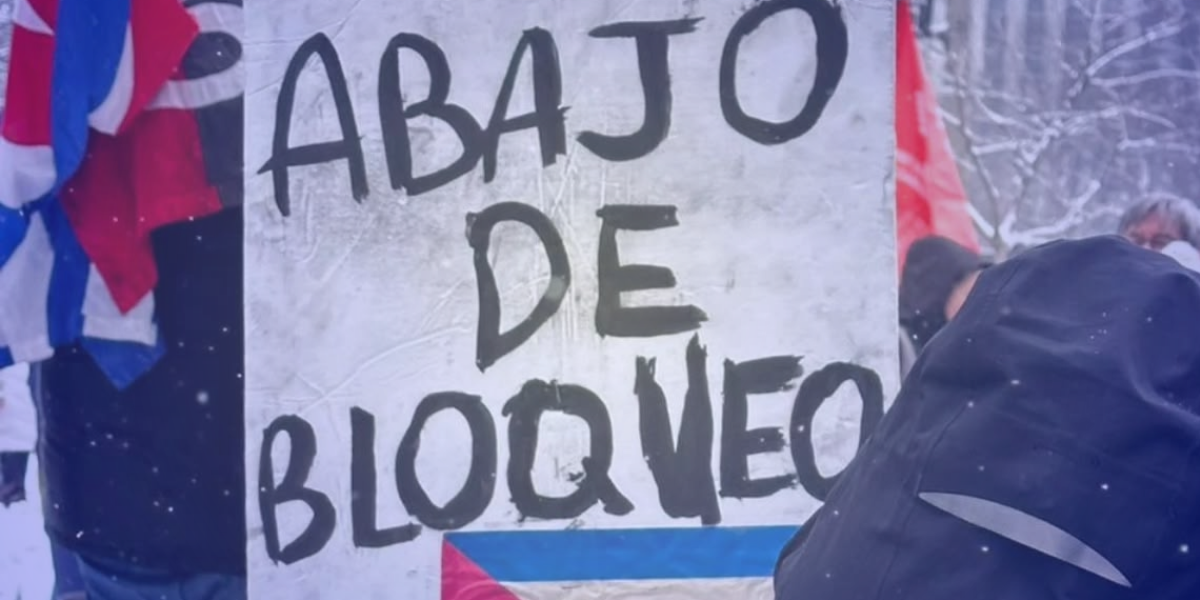
The first thing about Cuba today—what must be understood above all—is that the country has been subject to a U.S. economic blockade of massive proportions. The economic “blockade” itself is not a single law, but rather a collection of 240 measures that seek to cut Cuba off from the global economy, thereby starving it of the material resources it needs to sustain its socialist (or at least socialistic) system. Its worst excesses arguably derive from the way that the U.S. government coerces other countries into refusing to do business with Cuba.
For good reason, the devastating humanitarian consequences of the energy blockade has received much of the coverage on Cuba that exists in mainstream media. But the first-hand accounts we heard during our visit tell a much richer story. Brigadistas met students whose schools had to cut back on hours; we saw farmers driving horse-drawn carts and piles of garbage that could not be trucked out; our used water bottles were collected for exchanges of scarce black-market fuel. The government initiated a green energy transition in 2005. But Cuba’s vast solar resources cannot be harnessed when international vendors refuse to sell them the necessary parts and materials due to U.S. pressure.
In Cuba, energy subsidies are treated as a matter of social justice: at the time of our trip, Cubans paid around 100 pesos a month (about $5 Canadian dollars) for utilities. But subsidies will be slashed by the new economic model, the government’s response to what some call the “energy siege.” The dilemma that Cuba faces is this: how to minimize inequality and maintain social services while attracting urgently needed foreign investment.
Other underdeveloped countries facing similar or worse levels of suffering might resort to austerity measures that eliminate social services and privatize access to education, healthcare, and other social goods. What makes Cuba different is that it has maintained its system of free education, free healthcare, and subsidies for food and energy. It has preserved the measures that reflect its commitment to equality and human need.
Education and healthcare for all
Today, Cuba maintains that education is a right, not a consumer good. As we discovered at the University of Matanzas, it is provided free of charge from primary school all the way to post-university studies—and not only to Cubans (see below). This is an achievement otherwise reserved mostly for highly developed European countries.
And in Cuba, all students who apply to university are given places. The way they accommodate everyone is that applicants’ choice of major is granted according to prior performance (secondary school grades) alongside social needs (national planning). If a score isn’t high enough for a student’s first choice major, they are bumped to their second choice, and so on, until everyone has a seat. Perhaps most incredibly for a North American audience, every university student is also guaranteed employment after graduation—again, according to what is estimated to be most beneficial for society.
The Cuban commitment to universal education also extends beyond its borders. The Latin American Medical School (ELAM) provides free tuition, room, and board to low-income medical students from 120 countries, including from the U.S. In Cuba, where Che Guevara and Raúl Castro visited Gaza as early as 1959 and Fidel Castro in 1979 became one of the first world leaders to use the term “genocide” in that connection, 150 scholarships are granted to Palestinian students every year, with an additional 200 announced for Palestinian medical students in 2024. We heard from several of the 280 Palestine students currently on the island, who highlighted parallels between Israeli- and U.S.-led determination to destroy both countries while the rest of the world watches.
Cuba’s free healthcare system—unusual, again, for underdeveloped countries—demonstrates how its revolutionary leaders had the foresight to invest in what, we were told, is its greatest resource: the people. We learned at a hospital in Cárdenas that their focus is on preventative care and “diseases of the poor,” which costs the government less overall while benefiting more people. Together with prioritizing education, this has paid off in terms of pioneering medical accomplishments like the first drug against foot ulcers and first vaccine against Meningitis B, its COVID-19 vaccine (a million doses of which were donated to its close ally Venezuela), a life-prolonging lung cancer treatment, and its recent treatment for Alzheimer’s. All of this has been achieved under the U.S. blockade, with relatively scarce resources—thanks to the exceptional ingenuity and resourcefulness of individuals nurtured by Cuba’s constant prioritization of education and healthcare.
Food production
In addition to education and healthcare, people have additional basic needs: among them, food and energy. This is where some of the most obvious effects of the U.S. blockade can be seen.
Cuba—like many underdeveloped countries—relies on imports for much of its food, because colonizers appropriated its lands for cash crops for export at the expense of an agrarian system tailored to feeding the people. Primary amongst these cash crops was sugar, which we learned about firsthand during visits to the National Workers’ Union of the Sugar Cane Industry. Sugar production, contra predictions by mainstream economists, actually reached its highest-ever outputs after being nationalized during the revolution. Despite missteps by the government, the biggest blow came with the fall of the Soviet Union, since the Eastern bloc was one of Cuba’s only trading partners after the blockade.
Sugar production is now at a complete standstill, largely because the time-sensitive harvesting process requires machines, which require fuel, not to mention replacement parts. The U.S. energy blockade has prevented all but a single Russian oil tanker from arriving to Cuba in recent months. This also means a halt to production of all sugar side-products: rum, animal feed, paper board, and even bioelectric power. Most devastatingly, 30,000 sugar industry workers have lost their jobs. But thanks to some recently enacted labor code, employers are responsible for relocating workers to other positions—so far, 14,000 such jobs have been found for sugar industry workers. Where none are available, workers still receive 100% of their salary for the first month, and 60% thereafter.
Government rations are meant to ensure that people receive what they need for basic nutrition, e.g. 5-7 lbs. of rice every month. Under terrible scarcity imposed by the blockade, these are still universally provided—but reduced to 2 lbs., or missing altogether, as the government struggles to rotate resources across disproportionate needs. There is also artificial scarcity in the fact that many foods are reserved for tourists, an industry upon which Cuba has been forced to rely upon disproportionately since the Special Period.
Tourism
The tension between social justice and capitalist investment meant that energy shortages were not evenly distributed. Normally, the brigades are housed in a rural camping village, but the amount of gas necessary for transporting us to and from the city meant that it was more economical to put us in hotels (which also needed the business). Hence we were unexpectedly given the full tourist experience, with none of the suffering faced by ordinary Cubans.
Cuba begrudgingly turned to the tourism industry in response to the collapse of trade during the Special Period. Tourism is now central to the Cuban economy, and thus a special target of U.S. sanctions. For instance, tourists who travel to Cuba are barred from the U.S. visa waiver program. Canada—which has long furnished the greatest share of tourists—is directly implicated as well. Thanks to Air Canada, West Jet, and Air Transat caving to U.S. pressure and cancelling all flights to Cuba, what could have been direct 4-hour flights turned into itineraries of over 24 hours.
Political system
To be sure, Cuba’s political system—like any other—is not perfect; it is particularly criticizable for its repressive handling of dissent and defection. But this island under siege has faced some desperate choices.
What is extraordinary about Cuba’s National Assembly (whose members are called “deputies”) is the decisive role of mass organizations: the Cuban Workers’ Federation (i.e., trade unions), Federation of Cuban Women, National Association of Small Farmers, Federation of University Students, Union of Young Communists, and Committees for the Defense of the Revolution (i.e., neighborhood organizations). Members of these organizations are the ones who ultimately put together a slate for the National Assembly, via consultations with people from the candidates’ neighborhoods and workplaces. This is done while also ensuring a balanced cross-section of races, genders, ages, education levels, and occupations. Only then, finally, do Cubans vote to ratify (or not) these nominations.
¡Cuba, qué linda es Cuba! (How Beautiful is Cuba!)
Art, music, culture, and sport play an outsized role in Cuban society. In North America, governments relentlessly cut funding for cultural production and education deemed frivolous or “useless.” In Cuba, these are discussed in the same breath as basic necessities like food and energy. This has resulted in achievements such as the distinctively Cuban Method of ballet (whose National Ballet School is the largest and among the top ten in the world), the enormously influential Cuban music genres, and the largest number of Olympic medals in Latin America.
Our brigade was welcomed with—and often invited to join in—musical and dance performances at every school, university, and municipal ceremony we visited. We were treated to a dazzling night of Cuban jazz with Zulema Iglesias. We sang and danced with Vocal Clave de Sol, a community project consisting of a youth guitar orchestra and choir, who cheerfully played us both Cuban and North American hits.
Solidarity, not charity
The Cuba we visited was a country under extreme duress, the greatest it has ever seen. Marco Rubio has stated baldly: “Every time they create a new mechanism in which they try to get out of the noose, we just close it off.” But Cuba continues to find ways to circumvent this U.S. stranglehold. In June, as it has done several times since the Special Period, the government released a new economic framework, the product of a long deliberative process but also designed to weather the latest U.S. onslaught. These structural changes, the biggest since the Special Period, will inevitably produce unwanted effects such as increased inequality, thereby restratifying society. Unfortunately, that means that people on top of pre-revolutionary hierarchies (economically, racially, etc.) will reap the biggest rewards from the new measures. These are clearly concessions.
Still, every socialist should recognize at least this: “Cuba needs the world, but the world needs Cuba.” Yes, Cuba needs those of us in North America and other wealthy countries to send material aid. But this is comradeship on genuinely equal footing: we need Cubans to keep fighting, up close and personally, against history’s biggest capitalist power. We owe it our solidarity and defense. As one says in Cuba: ¡Hasta la victoria siempre!
Author

Did you like this article? Help us produce more like it by donating $1, $2, or $5. Donate